


Blocked Baby Nose? Your Complete Guide to Congestion, Colds & Clearing Mucus Safely
A blocked nose is one of the most common reasons babies become unsettled during a cold. Because babies have tiny nasal passages and can't blow their own nose, even a small amount of mucus can make feeding, sleeping and settling more difficult.
The good news? In most cases, a blocked nose is a normal part of a common cold and can be managed with simple supportive care while your baby recovers.
This guide explains why babies become congested, what you can do to help, when to seek medical advice and where to find more detailed guidance if you need it.
Why Do Babies Get Blocked Noses So Easily?
Babies aren't necessarily producing more mucus than adults, they just have much smaller noses.
There are three main reasons congestion affects babies so much:
- Their nasal passages are tiny, so even a small amount of mucus can make them sound very congested.
- They can't blow their own nose, meaning mucus often stays inside the nose until it drains naturally or a parent helps remove it.
- They naturally breathe through their nose while feeding, so congestion can make breastfeeding and bottle feeding more difficult.
If your baby suddenly seems frustrated during feeds or wakes more often with a cold, a blocked nose could be playing a part.
What's Normal When Your Baby Has a Cold?
Every baby is different, but these symptoms are usually common with a viral cold:
- A blocked or runny nose
- Noisy or snuffly breathing
- Sneezing
- Mild cough
- Watery eyes
- Feeding more slowly
- Waking more frequently overnight
- Wanting extra cuddles and reassurance
Most colds improve gradually with time as your baby's immune system fights the virus.
Remember, your role isn't to cure the cold, it's to help keep your baby comfortable while they recover.
How to Help a Baby With a Blocked Nose
If congestion is making your baby uncomfortable, there are a few simple things you can do.
1. Help Loosen the Mucus
Using saline according to the product instructions can help moisten and loosen thick nasal mucus.
This simple step often makes it easier to clear the nose afterwards.
2. Help Clear the Mucus
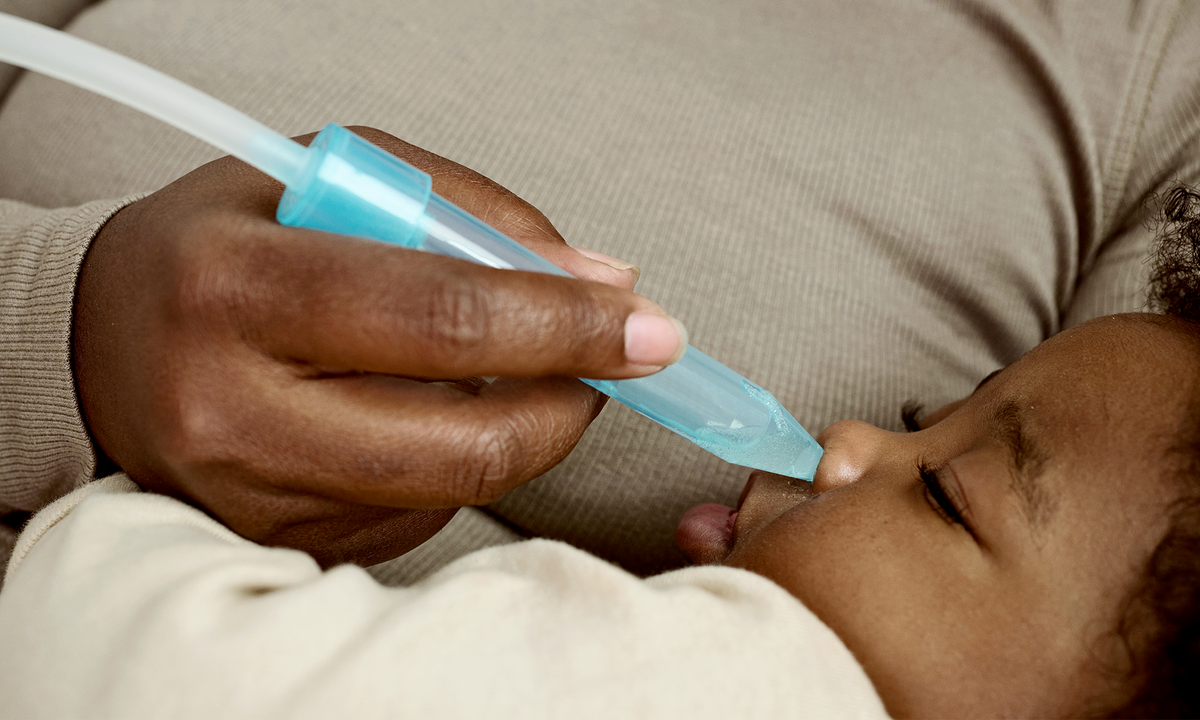
Once the mucus has loosened, a nasal aspirator designed to help remove nasal mucus can be used gently.
The aim isn't to remove every bit of mucus.
It's simply to help your baby breathe through their nose more comfortably, particularly before feeds or sleep.
Want step-by-step instructions? Read How to Clear Your Baby's Blocked Nose Safely
3. Keep Your Baby Comfortable
Continue offering regular feeds and plenty of comfort while your baby recovers.
Sometimes a cuddle is just as important as anything else.
Why Parents Talk About the "Two-Step Method"
One of the biggest lessons many parents learn during their baby's first cold is that the order matters.
Rather than going straight to suction, many parents find this simple approach works best:
Saline first. Then gentle suction.
Saline helps loosen mucus, while gentle suction helps remove it.
It's a simple routine that many parents say they wish they'd known sooner.
Learn more in Saline First, Then Suction: Why the Two-Step Method Works
Do Snot Suckers Really Work?
It's one of the most common questions parents ask.
A nasal aspirator isn't designed to treat or cure a cold.
Instead, it's designed to help remove nasal mucus from babies who can't blow their own nose yet.
When used as part of the two-step approach, many parents find it helps make feeding and settling more comfortable during a cold.
Read Do Snot Suckers Really Work? What Parents Should Know
Your Baby's First Cold Can Feel Overwhelming
The first cold is often the hardest, not because it's necessarily more serious, but because everything is new.
Many parents worry they're missing something.
The reassuring news is that blocked noses, noisy breathing and disrupted sleep are all very common during a cold.
Knowing what's normal can make those first winter sniffles much less stressful.
Read Baby's First Cold: What's Normal, What's Not & When to See a Doctor
When Should You See a Doctor?
Although most blocked noses improve with time, seek medical advice promptly if your baby:
- is under three months old and has a fever
- has difficulty breathing
- is feeding very poorly
- has significantly fewer wet nappies
- becomes unusually sleepy or difficult to wake
- seems to be getting worse rather than better
- or if you're worried for any reason.
You know your baby best.
If something doesn't feel right, trust your instincts and seek medical advice.
Your Winter Congestion Toolkit
When cold and flu season arrives, many parents like to have a few essentials ready before they're needed.
Your kit might include:
- Saline
- Frida Baby NoseFrida SnotSucker
- Replacement hygiene filters
- Tissues
- Plenty of patience and cuddles
Being prepared won't stop a cold, but it can make those first few sniffly nights feel a little less overwhelming.
More Helpful Guides:
Looking for more detailed advice? These guides explore each topic in greater depth.
How to Clear Your Baby's Blocked Nose Safely
Learn the simple steps to help remove nasal mucus safely and gently.
Baby's First Cold: What's Normal, What's Not & When to See a Doctor
Understand what to expect during your baby's first cold and when it's time to seek medical advice.
Why Babies Can't Blow Their Own Nose (and What Parents Can Do Instead)
Saline First, Then Suction: Why the Two-Step Method Works
Discover why this simple routine can make clearing your baby's nose easier.
Do Snot Suckers Really Work? What Parents Should Know
Find out how nasal aspirators work, common myths and why they're designed to help babies who can't blow their own nose.
What to Remember:
Blocked noses are a normal part of growing up.
The difficult part is that babies can't tell us how they're feeling, and they can't blow their own nose.
Understanding what's normal, knowing when to seek medical advice and using simple supportive care to help clear nasal mucus can make those inevitable winter colds a little less stressful for both you and your baby.
If there's one thing to remember, it's this:
You don't have to know everything. You just need the right information when you need it most.
Frequently Asked Questions:
Is it normal for my baby to have a blocked nose with a cold?
Yes. Congestion is one of the most common symptoms of a viral cold in babies.
Should I clear my baby's nose before feeding?
If congestion is making feeding difficult, helping clear nasal mucus beforehand may make feeding more comfortable.
Can a blocked nose affect my baby's sleep?
Yes. Congestion can make it harder for babies to settle and stay asleep.
Can a nasal aspirator cure a cold?
No. A nasal aspirator is designed to help remove nasal mucus. It doesn't treat or cure the virus causing the cold.
What's the most important thing to remember?
When your baby has a blocked nose, think:
Saline first. Then gentle suction.